April 6, 2026
Anthropic didn’t kill OpenClaw. It killed the illusion.
Anthropic made it explicit: third-party harnesses like OpenClaw no longer count against Claude subscription usage. That changes the economics, the trust and the ground AI builders stand on.

Anthropic finally stopped implying and said it plainly.
In emails sent around April 4 and April 5, the company told users that third-party harnesses, including OpenClaw, would no longer draw from Claude subscription usage limits. If users wanted to keep using those tools with their Claude account, they would need to enable extra usage and pay separately.
And if that no longer matched how they used Claude, Anthropic offered a refund.
That matters because it turns a murky product feeling into a clear platform decision.
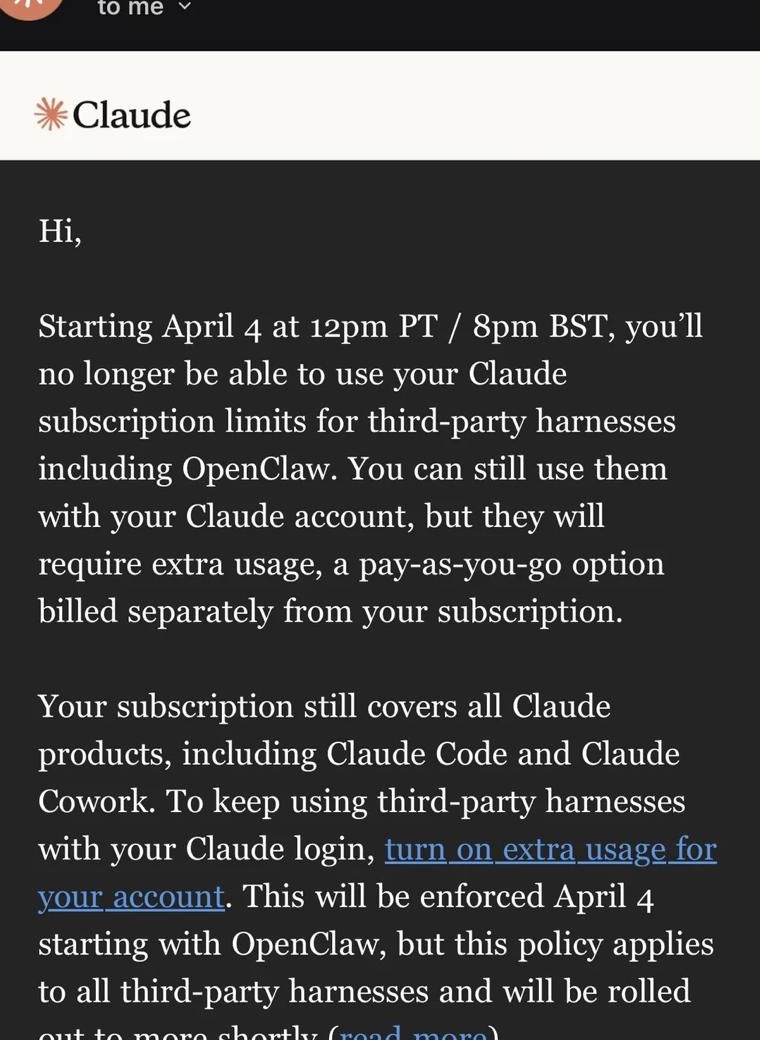
This moved the argument beyond developers getting annoyed on X. Anthropic drew the commercial line in writing: subscriptions cover Anthropic’s products, while third-party harnesses use metered billing.
Billing policy sounds dull until your product depends on it. Then it is platform power.
The important change was economic
Nothing here looks dramatic if you only watch the surface.
The API still exists. Claude still exists. Anthropic’s products still exist. There was no giant shutdown banner and no theatrical public breakup.
But the economics changed, and once the economics change, the platform changes with them.
First-party Claude products stay inside the subscription world. Third-party harnesses move to metered usage, and customers whose use case no longer fits can cancel.
The company explained the decision in blunt terms. These tools put outsized strain on their systems. Capacity is limited. They need to prioritize customers using core products.
That is fair enough from Anthropic’s point of view.
Builders should read the incentive clearly. Anthropic is defending the economics of its own products.
OpenClaw’s response exposed the fault line
OpenClaw’s release post for 2026.4.5 put it better than most essays could:
“Anthropic cut us off. GPT-5.4 got better. We moved on.”
It skips the self-pity and describes the operating reality. A dependency changed, the team adapted and the product kept moving.
Vendor risk is not surprising anymore. Anyone serious has known for a while that this day would come in some form. What matters is how a team behaves when it finally does.
OpenClaw removed Claude CLI from new onboarding, kept legacy setups runnable and strengthened other provider paths. The release still felt like a release, not a hostage note. That is a useful standard for handling vendor risk.
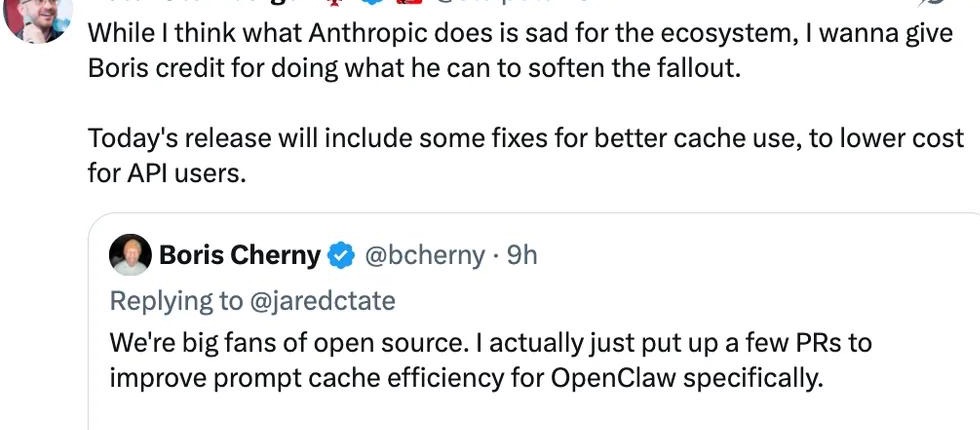
Peter Steinberger said the quiet part out loud too. He called Anthropic’s move sad for the ecosystem, then gave Boris Cherny credit for doing what he could to soften the fallout. That matters. It shows this was not treated internally as a minor pricing tweak. It was understood as ecosystem damage, and the response was to reduce the blast radius for users.
Theo showed the user-side trust collapse
At the same time, Theo posted what a lot of developers were already starting to feel.
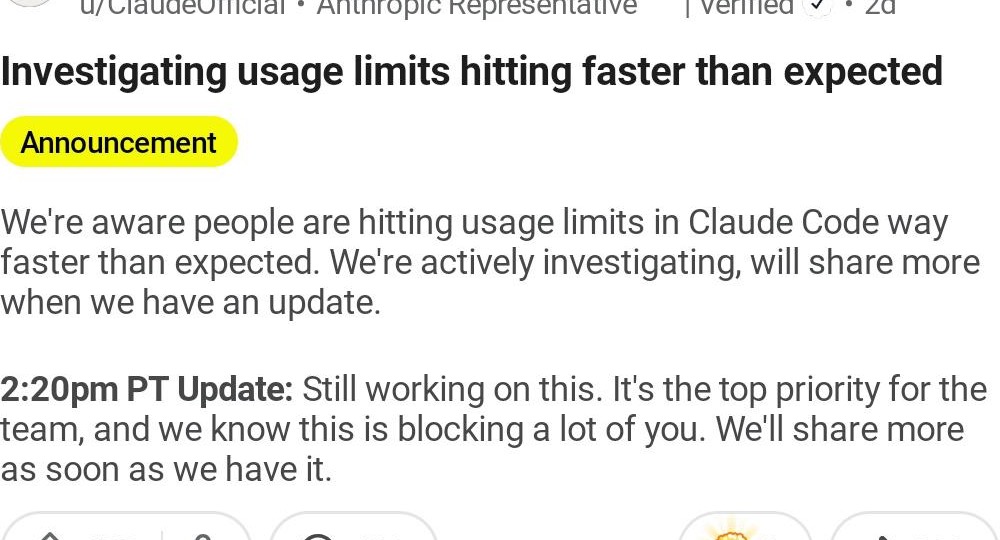
Claude Code had begun refusing kinds of work he used it for regularly, especially system-fixing tasks. Then he said they were trying so hard to kill OpenClaw that they had made Claude Code unusable. Then came the detail that really sticks: Claude Code now throws an error if you try to use it to analyze the Claude Code source.
That is not just a pricing story. It is a trust story.
Developers do not lose faith in a coding tool because of one weaker benchmark or one bad output. They lose faith when the tool starts behaving like it has another boss.
When obvious work gets blocked, normal technical inspection gets refused, or the product begins to feel more like a guarded corporate surface than a dependable instrument, trust starts leaking.
The model may still be smart and its output may still be strong. The relationship changes anyway. For a coding tool, that trust is a large part of the product.
The refund link says more than the policy text
One of the most revealing details in Anthropic’s emails is the refund flow.
If the new setup does not work for you, cancel and get a refund. If you subscribed through Apple, go through Apple. Metered extra usage is available. Discounted bundles are live. One-time credit is available for a short window.
That is a very specific kind of message.
It is not the language of a company trying to preserve a healthy external ecosystem around an existing subscription promise. It is the language of a company redrawing the commercial boundary and offering an orderly exit if your use case no longer fits.
In other words: pay for metered usage or leave. I almost prefer that bluntness to vague ecosystem language, but it is not an ecosystem-friendly move.
This is how platforms narrow without “closing”
A platform rarely needs to kill your product outright. Making your use case more expensive, less reliable and harder to explain to customers is usually enough.
From a distance, the platform still looks open. There is still access. There is still an API. There is still a path.
Strategically, though, the old deal is gone.
That is what happened here. Anthropic did not need to turn Claude off for OpenClaw or other harnesses. It only needed to make subscription-backed third-party usage no longer part of the package.
That one move changes the ground under every builder standing there.
The timing made it worse
The enforcement email landed over Easter weekend.
Not as a thoughtful essay about the future of AI ecosystems. Not with a serious migration story for builders. Just a cold operational message: the policy is live, turn on extra usage if you want to continue, cancel if you do not.
That timing sharpens the emotional reaction, but it also highlights the deeper truth. Dependency risk never arrives on a polite schedule.
Holiday, weekend, middle of the night, it does not matter. If your product depends on someone else’s surface, they get to change it whenever they want.
Teams with experience of platform risk treat this as an incident, not discourse. That is why OpenClaw’s response matters more to me than Anthropic’s email.
Peter Steinberger’s team seems built for this phase
Peter recently posted that it becomes extremely effective when an agent tracks work in markdown and the loop is automated enough to run for hours.
That suggests a team building for durable state, long-running loops and providers that can be swapped without rebuilding the product.
That is the right instinct for this phase of AI.
The early playbook was simple: connect to the smartest model, wrap it nicely and build on top. A provider changing the economics now stress-tests that architecture immediately.
Some teams are ready for that. Many are not.
My read
Anthropic changed billing and revealed the hierarchy: core products first, external heavy usage in metered lanes, refunds for customers who no longer want the deal.
Theo’s posts showed how this feels from the developer chair. OpenClaw showed how it looks from the builder chair.
One side experienced the trust loss. The other adapted.
If you are building in AI right now, this week was a useful reminder:
Never confuse access with aligned incentives.
The API existing does not mean the platform wants your category to thrive.
A subscription working today does not mean your economics are safe tomorrow.
And a model vendor helping you grow does not mean they will keep doing it once your usage stops fitting their incentives.
Anthropic didn’t kill OpenClaw.
It killed the illusion that third-party agent platforms could keep scaling on borrowed subscription economics.
That illusion was always temporary.
Now it is gone.